Bentonite BEFORE Fermenting?

  • PATRONS: Did you know we've a chat function for you now? Look to the bottom of the screen, you can chat, set up rooms, talk to each other individually or in groups! Click 'Chat' at the right side of the chat window to open the chat up.
  • Love Gotmead and want to see it grow? Then consider supporting the site and becoming a Patron! If you're logged in, click on your username to the right of the menu to see how as little as $30/year can get you access to the patron areas and the patron Facebook group and to support Gotmead!
  • We now have a Patron-exclusive Facebook group! Patrons my join at The Gotmead Patron Group. You MUST answer the questions, providing your Patron membership, when you request to join so I can verify your Patron membership. If the questions aren't answered, the request will be turned down.

joemirando

Got Mead? Patron
GotMead Patron
Hey gang,

I was just reading an article about wine making were the author espoused the use of bentonite in the must, before fermentation. His/her reason for doing this is based on the theory that the bentonite will swirl around in the must, providing nucleation points for the CO2, which will rise, allowing the CO2 to leave the must, and the bentonite particle to sink back to the bottom to begin the process again.

Has anyone added bentonite at this point, instead of on finishing? If so, was it worth it? Are there downsides?


Thanks,

Joe
 
Lots of different ideas about the making of stuff Joe.

Its also thought to help bind any proteins etc so while it might swirl a bit during the making, it helps to drag stuff out clearing quicker..... or something like that....

It seems its an older method/technique thats less used. Plus just stiring for aeration, creates enough nucleation points for the carbonic acid to bind with and come out as gaseous CO2 (in other words, you stir the ferment to aerate but it bubbles like f*** for a while first and we learn the lesson of stirring slowly first then building up, otherwise you can get a fountain/eruption).

Personally I don't use bentonite, I generally just let my batches clear naturally and if they prove stubborn I just use 2 part finings.....
 
Lots of different ideas about the making of stuff Joe.

Its also thought to help bind any proteins etc so while it might swirl a bit during the making, it helps to drag stuff out clearing quicker..... or something like that....

It seems its an older method/technique thats less used. Plus just stiring for aeration, creates enough nucleation points for the carbonic acid to bind with and come out as gaseous CO2 (in other words, you stir the ferment to aerate but it bubbles like f*** for a while first and we learn the lesson of stirring slowly first then building up, otherwise you can get a fountain/eruption).

Personally I don't use bentonite, I generally just let my batches clear naturally and if they prove stubborn I just use 2 part finings.....

So you use finings for initial clearing and a filter to polish for bottling?
 
I, myself, am reading about fining agents. I was wondering about using bentonite during initial fermentation, followed by a boiled irish moss preparation during a later racking. But, fatbloke's comment in another thread about fining only after backsweetening made sense... and since then, I decided that I will try quick-kleer (kieselsol/chitosan) on the next occasion to do so.

I read about bentonite possibly stripping out some types of proteins, and changes in sugar concentrations to the must -- these are not necessarily bad, but I don't know what effect it could have on the aromatic qualities in our honeys. Also, there are some wine kits that advise that they be fined with bentonite at the start, but they are formulated in a certain way for it. Mind you, all I know about it is what I've read, not what I have experienced.

Here's some links, hope they have some good info for you:

http://wineserver.ucdavis.edu/pdf/attachment/80 bentonite and fermentation.pdf
http://www.makewine.com/winemaking/finishing/fining/
http://www.winemakermag.com/stories...n/26-a-clearer-understanding-of-fining-agents
http://www.homebrew.com/articles/article01130104.shtml
http://www.fallbright.com/lq_kieselsol_chitosan_instructions.htm
 
I, myself, am reading about fining agents. I was wondering about using bentonite during initial fermentation, followed by a boiled irish moss preparation during a later racking. But, fatbloke's comment in another thread about fining only after backsweetening made sense... and since then, I decided that I will try quick-kleer (kieselsol/chitosan) on the next occasion to do so.

I read about bentonite possibly stripping out some types of proteins, and changes in sugar concentrations to the must -- these are not necessarily bad, but I don't know what effect it could have on the aromatic qualities in our honeys. Also, there are some wine kits that advise that they be fined with bentonite at the start, but they are formulated in a certain way for it. Mind you, all I know about it is what I've read, not what I have experienced.

Here's some links, hope they have some good info for you:

http://wineserver.ucdavis.edu/pdf/attachment/80 bentonite and fermentation.pdf
http://www.makewine.com/winemaking/finishing/fining/
http://www.winemakermag.com/stories...n/26-a-clearer-understanding-of-fining-agents
http://www.homebrew.com/articles/article01130104.shtml
http://www.fallbright.com/lq_kieselsol_chitosan_instructions.htm

I have a 1 gallon batch of sack mead fermenting now, and for giggles, I decided to try this "bentonite first" approach. I CAN tell you that the equivalent of 1/4 teaspoon (2 TBS dissolved in 2 cups boiling water, then 1 TBS of that added to must) plays hell with the must before pitching the yeast. Blobs of stuff coalescing all over the place.

What I was really interested in was the way it cut down on foaming/bubbling. I aerate 2x daily with an aquarium pump and air stone till the 1/3 sugar break, and usually I have to watch very closely so that the big soapy looking bubbles don't climb out and down the side of the jug. There's not even a hint of that with the bentonite in there.

It remains to be seen whether or not it will affect the taste at the finish. We shall see.


-Joe
 
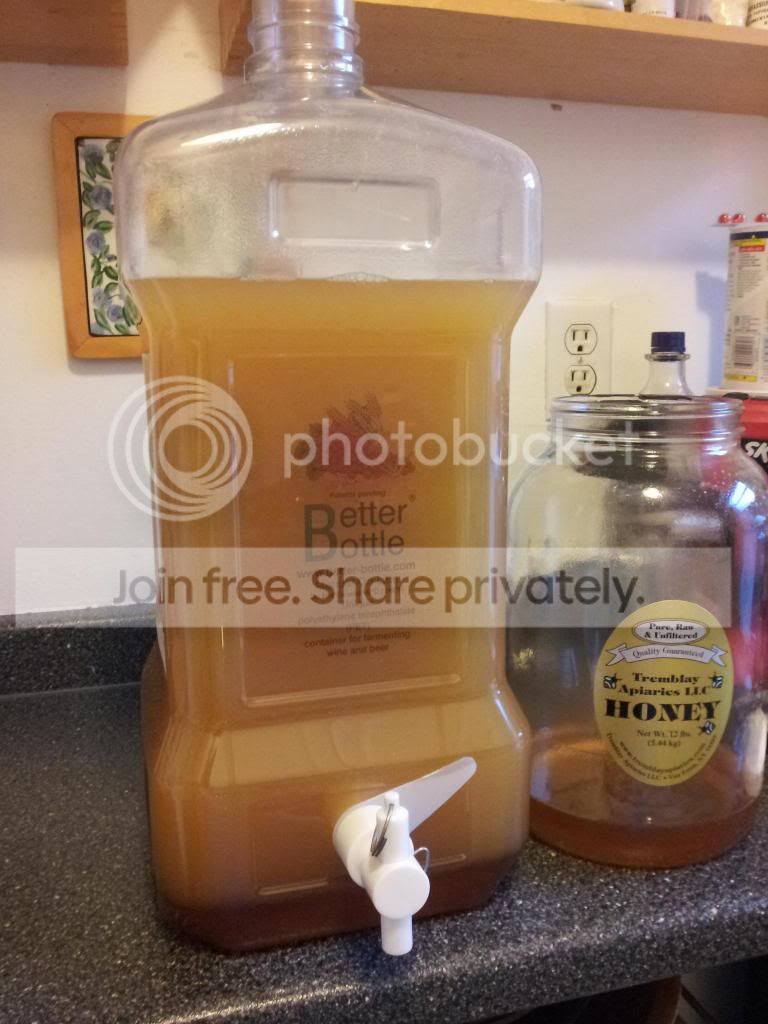
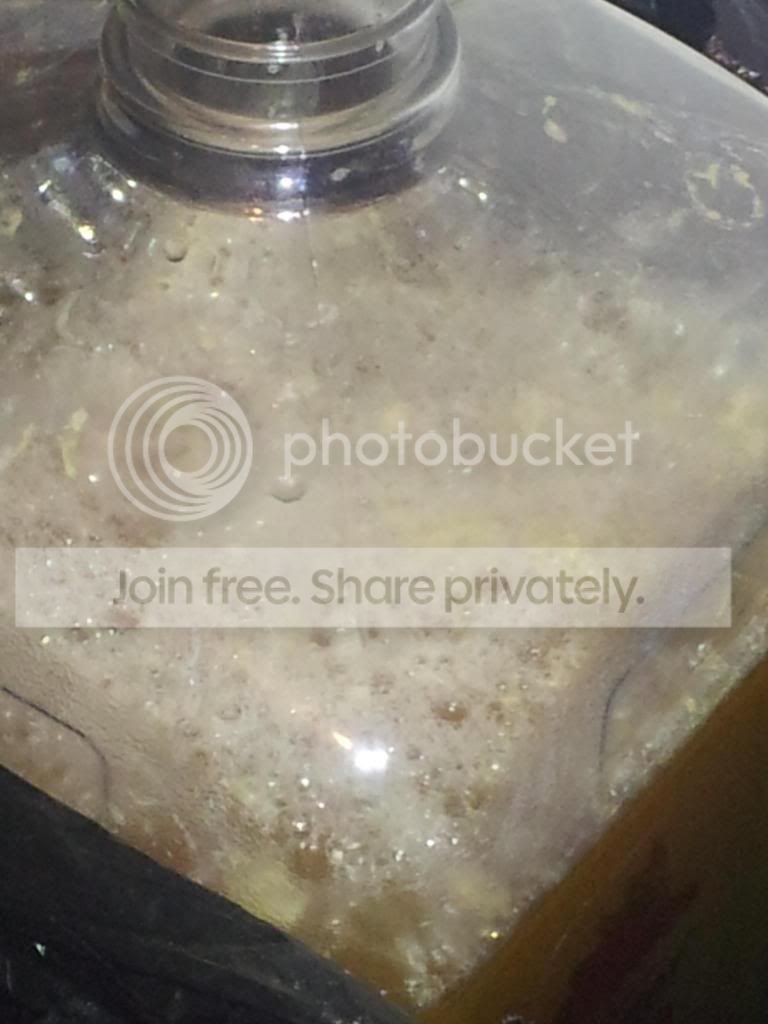
What kind of vessel is your primary? And how much must do you put in it? It might be worth getting a fermentation pail, just to get past the foaming stage. As you can see in these two pics, there's plenty of room for the foam in the 3 gallon jugs I have, as long as I leave head space:

2013-07-07200537.jpg


2013-07-08223139.jpg
 
This particular batch is in a 1 gallon jug. I always leave enough headspace to account for foaming/bubbling. That wasn't the issue here. I just found it interesting that the bentonite cut down on it.

With the sack mead, I accounted for step-feeding it, leaving the headspace to accommodate all the extra honey.

Eventually, I'd like to get a couple of those bad boys, but its not in the cards right now.

As an aside, I have also seen it mentioned that the bentonite will help with degassing. Degassing, foaming, clearing... all things I want to see the effects of pre-fermentation bentonite on.


Thanks,

Joe
 
Yep, well just tonight I had a small MEA from vigorously stirring a one gallon, but the 3 gallon held it no problems.

Post of pic of the bentonite-laden batch -- I'm curious. :) Also, are you keeping a mead log of it here, on site? It would be informative. You might find it's a really good process, and I'd like to know how it goes.
 
Yep, well just tonight I had a small MEA from vigorously stirring a one gallon, but the 3 gallon held it no problems.

Post of pic of the bentonite-laden batch -- I'm curious. :) Also, are you keeping a mead log of it here, on site? It would be informative. You might find it's a really good process, and I'd like to know how it goes.

I haven't been keeping a log here, but I DO have it all written down. The problem for me is that a lot of it is still in flux, and I would hate like hell to post something that looks promising and have someone "jump on the bandwagon" and waste the life's work of many 10's of thousands of bees, not to mention countless billions of poncy french single-celled beasts in the process.

I didn't think to take a picture of the pre-pitch must. I should have. It was gross. <lol>

And since the must contains the bentonite and a cup of strong black tea, it was a totally unappealing color to boot. It has now, after 2 or 3 days, settled back to a lovely butterscotch color. If this batch works in ANY way, shape or form, I will reproduce it, taking pictures all along the way.

And I know right at the outset that I'm going to catch hell for using a champagne yeast (Premier Curvee). This is a test too. I want to see if the huge amount of honey (4.5 lbs is my target.. could be more, could be less) will balance against the tendency of yeasts like this to blow all the subtle aromas and flavors out the airlock.

If it comes out the way I hope, I'll start another one again right away and document it for 'public consumption'. If it doesn't, I'll start over and learn from the mistakes. That's up to bottling, of course. I expect this one to take years to mature.

In short, here is my plan as it stands now:

1 Gallon batch
  • 4.5 lbs clover honey to be added in increments (3 pounds initially)
  • 1 cup strong black tea
  • 1 tsp nutrient (to be added in increments)
  • 1 tsp energizer (to be added in increments)
  • Water to bring level to ~0.75 gallons (to make room for all the extra honey)
  • 1/4 tsp prepared bentonite
  • Premier Curvee yeast

Mix everything but the yeast, let it sit overnight.
  • OG 1.140 (kind of high, but with aeration and nutrition, I hope the yeast can handle it)
  • Proof and pitch yeast
  • Aerate and add yeast
  • Add 3/4 tsp each nutrient and energizer once activity begins
  • Aerate 2x/day
  • Check SG daily, add 0.5 lbs when SG is down to 1.010 (gets me close to the max ABV without going over), add 1/4 tsp each nutrient and energizer
  • Check SG daily, add 5.0 oz (yes, I changed to oz here) each time the SG drops to 1.010
  • When SG stops falling, assess whether to add more honey
  • Let it clear and assess the usefulness of the bentonite

We shall see.

Joe

ps: Go ahead, guys, gimme hell for the yeast choice. <grin>
 
I certainly won't give you hell. And those bees would have made that honey whether you used it or not, they did their job and got fulfillment just as we all do our jobs. Was that Carthaginian traders life wasted as he brought home wealth? Same same. The only thing I might suggest you consider is step feeding. That way you risk less chance of a stuck fermentation. Other than that, your main down side is having to age the result for a couple years before it is really enjoyable.
 
...The only thing I might suggest you consider is step feeding. That way you risk less chance of a stuck fermentation. Other than that, your main down side is having to age the result for a couple years before it is really enjoyable.

That is exactly what I am doing. I started the batch with three pounds of honey and, once the SG drops to 1.010, I will feed it from 0.5 lbs (first addition) to 5.0 ounces (each subsequent step) until the yeast has reached its limit.

I am also aerating past this particular batch's 1/3 break. I did the math on what percentage of sugar would be left in the must with a traditional must at the 1/3 point, since the yeast don't know what is planned... I tried telling them, but they won't listen... is there really a difference to the yeast as to whether its 1/3 of the way through an 18% ABV and a 12% ABV must?


Joe
 
On my batch I ignored best practice, and aerated a bunch more than I should have, perhaps you could call it over-enthusiastic degassing? I also fed perhaps a little more than I should have too, because I used FermaidO almost exclusively, so felt it was a safe risk. I'm no expert, as I've said a thousand times, but my batch ate through the sugar like a champ, and managed 3 step feedings too, I can't smell anything bad about it. So until it tastes like 6 gallons of dishwater, or smells like a meth lab, I'm calling success on mine!

I'll come unstuck at some point in the future using this methodology too often, I know I will, but hey ho, the best learned lessons are the ones we learn from costly mistakes, no?

Tony.

I am also aerating past this particular batch's 1/3 break. I did the math on what percentage of sugar would be left in the must with a traditional must at the 1/3 point, since the yeast don't know what is planned... I tried telling them, but they won't listen... is there really a difference to the yeast as to whether its 1/3 of the way through an 18% ABV and a 12% ABV must?
Joe
 
The problem for me is that a lot of it is still in flux, and I would hate like hell to post something that looks promising and have someone "jump on the bandwagon" and waste the life's work of many 10's of thousands of bees, not to mention countless billions of poncy french single-celled beasts in the process.

Only you can make the decision to declare it a waste and pour it down the drain... just remember, the yeast know what they're doing, and even if you didn't start optimally, you'll probably still get something not bad out of it. Like UKTony says, until it tastes like dishwater or smells like a meth lab... although I'd add "after a year of age" to that, I've had the odd one that was revolting straight out of primary but after a year was pretty good.

And about how to figure the 1/3 break? Well, my theory is that since it's when your yeast slow down on their breeding that they no longer need oxygen and no longer use DAP, and they don't know what you've got in store for them, they only know what you've given them to start with. So I'd go by the initial SG, not by the total estimated SG. Although given that YOU know what's in store for them, maybe a bit of extra nutrients and energizer before the 1/3 break wouldn't be a bad plan (maybe 25 to 50% extra) so they'e extra energetic before you begin your step-feeding.
 
Only you can make the decision to declare it a waste and pour it down the drain... just remember, the yeast know what they're doing, and even if you didn't start optimally, you'll probably still get something not bad out of it. Like UKTony says, until it tastes like dishwater or smells like a meth lab... although I'd add "after a year of age" to that, I've had the odd one that was revolting straight out of primary but after a year was pretty good.

And about how to figure the 1/3 break? Well, my theory is that since it's when your yeast slow down on their breeding that they no longer need oxygen and no longer use DAP, and they don't know what you've got in store for them, they only know what you've given them to start with. So I'd go by the initial SG, not by the total estimated SG. Although given that YOU know what's in store for them, maybe a bit of extra nutrients and energizer before the 1/3 break wouldn't be a bad plan (maybe 25 to 50% extra) so they'e extra energetic before you begin your step-feeding.

Already taken into account. I dosed them beasties with 3/4 tsp of each once they went active in the must, and I will dose them again with either 1/4 or 1/2 tsp again just before I start stepping. Probably 1/2, since its going to be a long road to completion.

I have only ever thrown out one batch; a 1 gallon batch of cherry mel. I puree'd the cherries and what was left after racking off the sludge was sour and bitter and, truth be told, rather foul. It didn't taste or smell of spoilage, but i didn't have the resources to put it on hold till it did its thing . I probably COULD have saved it, but I was itching to try other things, and i needed the space.

And yeah, I fully expect this one to take a year or two to age. I'm pushing a champagne yeast past its tolerance. Although at the moment it smells, looks and even tastes a bit like cafeteria orange juice. You know the stuff. If the yeast taste mellowed out, i wouldn't mind it tasting like it does right now.

Thanks,

Joe
 
This will probably be tough to read for anyone trying to read it on a smartphone. Be warned. ;)

Well, this batch of sack mead is slowing down. The use of Premier Cuvee does not seem to have harmed the aroma/flavor as much as I thought it would.

I ended up having a total of 4.75 lbs of honey in the gallon batch, for a 'virtual' OG of 1.171 and a maximum ABV of 21.xx%

This was the batch that had bentonite added to the must, staggered nutrient additions and step feeding.

Fermentation has now slowed way down, and the SG has been sitting at 1.012 for a day and a half so far, so I think its about done.

Oddly, for something that's supposed to have an ABV of just under 20%, it doesn't have a big kick to it, and the honey is quite a bit more noticeable than a FG of 1.012 would lead me to expect.

I've been over and over my math and checked and re-checked my hydrometer, and I think I've gotten everything right.

From here on out, I will be watching the SG and, if it slips close to 1.000, I will add more honey until it gives up the ghost.

I wasn't going to post the recipe or journal entry for it till I was much closer to being ready to start the second batch, but what the heck. I'll tell all a little lower down.

When this is ready to go to secondary, I will be fixin' to make another batch of sack, using Red Star Pasteur Red yeast this time, so I expect a lower ABV, which is fine with me.

Here's the journal thus far:

Sack Mead
1 Gallon total

08/17/13
  • 3 lbs clover honey (to start)
  • 1 tsp black tea, brewed strong
  • 1/4 tsp bentonite
  • water to 1 gal (froze about 2 lbs for topping off)
  • premier cuvee yeast (this may be a mistake)
  • nutrient(Thiamin/Vitamin B Complex) and
    energizer(DAP/Yeast Hulls/Magnesium
    Sulphate/B Complex),
    stepped (3/4 tsp at pitching, 1/4 tsp at 1/3 break)
  • OG = 1.106
Shooting for 4.5 lbs of honey total

Plan:
Step-add 5.0 oz at a time when SG drops to 1.010, which should bring it up to 1.020


Heeeeere we go:

08/17/13pm SG = 1.106 aerate (3 lbs honey)
08/18/13am SG = 1.080 aerate (added 3/4 tsp each nutrient & energizer)
08/18/13pm SG = 1.066 aerate
08/19/13am SG = 1.052 aerate (added 1/4 tsp each nutrient & energizer)
08/19/13pm SG = 1.040 aerate
08/20/13pm SG = 1.030 aerate
08/21/13pm SG = 1.018 aerate
08/22/13am SG = 1.010 --> 1.024 aerate (added 0.5 lbs honey, 1/4 tsp nutrient)
08/23/13am SG = 1.012 --> 1.022 (added 5.0 Oz honey)
08/23/13pm SG = 1.020
08/24/13am SG = 1.012 --> 1.028(???) (added 5.0 Oz honey)
(added 1/8 tsp nutrient)
08/25/13am SG = 1.014 (pH ~3.2, added 1/2tsp calc carb)
08/25/13pm SG = 1.012 --> 1.022 (added 5.0 Oz honey)
08/26/13am SG = 1.020
08/27/13am SG = 1.012 --> 1.022 (added 5.0 Oz honey)
08/28/13am SG = 1.016 (pH 3.8 ) (added 1/2 tsp boiled yeast)
08/29/13am SG = 1.012
08/30/13am SG = 1.012

This gives me a total of 4.75 lbs of honey and a 'virtual' OG of 1.171, with a possible maximum ABV of 21.17 and a current actual ABV of 19.89

Ok, I now open the floor to comments/thoughts/suggestions/anecdotes.

I will be posting my second attempt in the brew log here. This one is just to try to work any kinks out.

Anyone have opinions on Red Star Pasteur Red yeast?


Thanks,

Joe

 
Well, other than the yeast.....

I used to use various yeasts, including packs of redstar stuff (various) that a friend in Ok used to send, these days my traditionals have settled on either D21 if I can get it or K1v1116 (both the types apparently used by the late Brother Adam in his traditionals ).

I like the flavours and good ageing abilities of them.....
 
Well the SG on this one is very very slowly dropping (it took 4 days to drop from 1.012 to 1.010), and it is surprisingly aromatic and pleasingly tart (reminiscent of cafeteria orange juice in both taste and aroma), and it occurs to me that this one might be drinkable young. Its perceived sweetness at 1.010 is higher than any other mead I've got going at the same SG, and even one or two that are a bit higher, and there is no rough alcohol bite, no perceptible 'heat'. At this point, I am hoping that it goes drier so that I can sort of start with a blank palette, so to speak, but if it never gets any drier than this, that'll be okay too. This is day 14, by the way.

I had not expected this outcome for several reasons:

  1. It was fermented with 1118 yeast
  2. I experimented with adding bentonite before pitching the yeast
  3. This is my first attempt at 'real' step feeding
  4. I took a guess at nutrient/energizer additions
  5. I aerated past the 1/2 sugar break
  6. The alcohol percentage is 20% now
  7. I don't know what the hell I'm doing

The lees have not yet really begun to settle, so I guess I shouldn't count my chickens before they hatch, but I am quite happy with the progress on this one.

I still intend to make another batch with Red Star Pasteur Red and see what differences I can perceive, but I think I'm pretty much sold on my processes and procedures, for a sack mead, anyway. If THIS is the result I get from 1118, which is known for sucking the taste and aroma from a mead, I can't wait to see how it comes out with Pasteur Red. And yes, PR is of a lower alcohol tolerance than 1118, but that's okay too.

Thoughts/comments/anecdotes?

Joe